
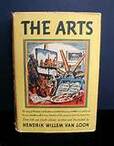
The Arts
by Hendrik van Loon Author
A history of the arts throughout the ages, with illustrations by the author (Hendrik van Loon).
Additional Details
- Resource Type
- Book
- ISBN
- B0006DJGQK
- Print Status
- Out of Print
- Chapters
- 63
- Pages
- 677
- Suggested Grades
- 7th - 12th
- Publisher
- Simon and Schuster
- Written
- 1937
Chapters
- 1 Prologue: the nature of art
- 2 The Art of Prehistoric Man
- 3 The Art of Egypt
- 4 Babylon and Chaldea and the Land of the Mysterious Sumerians
- 5 Heinrich Schliemann: Serendipity
- 6 The Art of the Greeks
- 7 The Age of Pericles
- 8 Pots and Pans and Earrings and Spoons: Hellas
- 9 The Etruscans and the Romans
- 10 The Jews
- 11 Early Christian Art
- 12 The Copts
- 13 The Art of the Byzantines
- 14 Russia: art up a blind alley
- 15 Islam: the art of a desert people
- 16 Medieval Persia: the great melting pot of all the arts
- 17 The Romanesque Period: art among the ruins
- 18 The Provence
- 19 Gothic: a beautiful fairy story in an ugly world
- 20 The End of the Gothic Period
- 21 The Spirit of the Renaissance
- 22 Florence
- 23 Il Beato Fra Giovanni Angelico da Fiesole: the St. Francis with a brush
- 24 Niccolo Machiavelli: and the new patrons of art
- 25 Florence Comes Into its Own as the World's Greatest Arts Center
- 26 The Putti: the cheerful little Bambini which the Florentine sculptors brought back to life
- 27 The Invention of Oil Painting
- 28 The Italian Picture Factory Gets Underway
- 29 America: the Old World discovers the new one
- 30 New Ears Begin to Listen Where New Eyes Have Already Been Taught to See
- 31 The New Prosperity Reaches the Heart of Europe
- 32 A Mighty Fortress is Our God: Protestantism and the arts
- 33 Baroque
- 34 The Dutch School of Painting: a strange epidemic of pictorial exuberance affects and entire nation
- 35 The Grand Siecle
- 36 Monsieur de Moliere Dies and is Buried in Sacred Ground
- 37 The Actor Makes His Reappearance
- 38 The Opera: the court of Versailles is treated to a few novelties of a musical nature
- 39 Cremona: a slight detour to visit the home of the fiddle-making dynasties of Lombardy
- 40 A New and Fashionable Form of Entertainment: Monteverdi and Lulli and the beginning of the French opera at the court of Louis XIV
- 41 Rococo
- 42 Some More Rococo: the 18th century in the rest of Europe
- 43 India, China, and Japan: Europe discovers it can learn a great deal from these very unexpected quarters
- 44 Goya: the last of the great universal painters
- 45 The Picture-book gives way to the music book
- 46 Bach, Handel, Haydn, Mozart, and Beethoven: the General Staff leads its army of humble music-teachers to a brilliant victory
- 47 Pompeii, Winckelmann, and Lessing: a little Roman city, recently arisen from its ashes, and two learned Germans combine to give new impetus to the so-called "classical movement."
- 48 Revolution and Empire: the triumph of the classical style concludes with an attempt to turn the artist into a political propagandist
- 49 Chaos: 1815-1937: Art and life part company
- 50 The Romantic Period: the great escape into the realm of the ruined castle and the broken hearted poet in the checkered pantaloons
- 51 Revolt in the Studio: the realists refuse to find further safety in escape and start a counter-attack of their own
- 52 Asylum: the museum makes its appearance as a most welcome home for the aged but is in no way fit to act as a place of refuge for the living
- 53 The Music of the Nineteenth Century
- 54 Das Lied: for which you can substitute the word "song" but it won't be quite the same
- 55 Paganini and Liszt
- 56 Berlioz: the beginning of our modern "popular" music
- 57 Daguerrre: the painter encounters a formidable rival in Monsieur Daguerre's "heliographic pictures"
- 58 Johann Strauss: and how dance and music came once more to be composed for the purpose of making people dance
- 59 Chopin: the originator of the modern nationalistic "blues"
- 60 Richard Wagner: the father of the Germany of Adolf Hitler
- 61 Johannes Brahms: the amiable philosopher who thought in terms of music
- 62 Claude Debussy: the impressionistic style moves from the painter's studio into the study of the composer
- 63 A Final Word: a word of farewell and good cheer
User Reviews
Add a Review

You'll need to log in to your account before leaving a review. Don't have an account? You can sign up for free!